Stripe Architecture
Global Merchant Onboarding
An exhaustive legal-grade operational manual analyzing merchant gateway onboarding parameters, document matching checks, chargeback mitigation loops, Form 1099-K tax integrations, and backend API routing protocols.
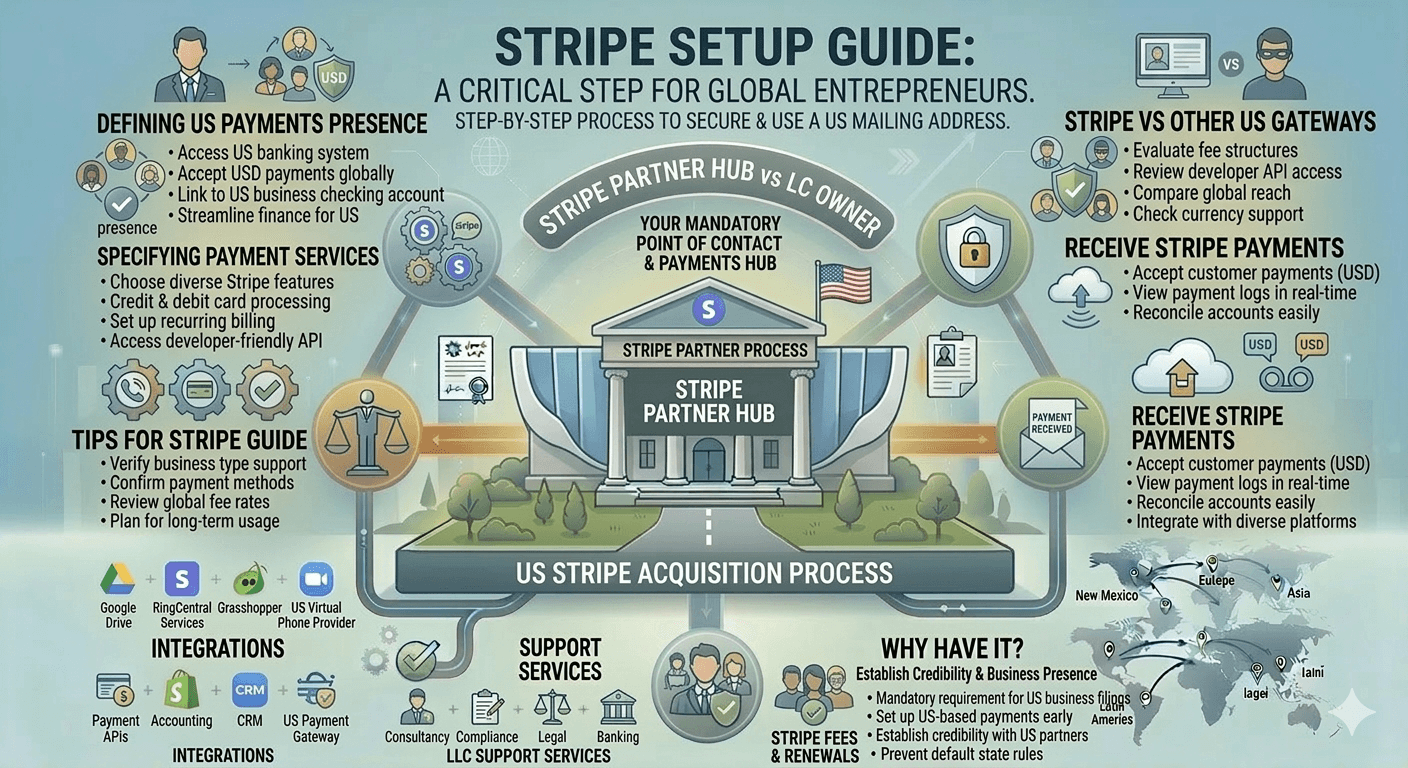
What is the primary structural challenge for global non-resident founders when onboarding onto the Stripe merchant payment processing network?
The primary structural friction layer for an international non-resident builder when accessing the Stripe merchant matrix resides within automated compliance screening algorithms. Stripe operates under strict federal financial mandates, including Know Your Customer (KYC), Anti-Money Laundering (AML), and Customer Due Diligence (CDD) guidelines enforced by global banking networks. When a foreign entrepreneur applies from outside the United States, Stripe's underwriting engine runs programmatic background validations against state databases and IRS files. To successfully clear these compliance gates, your corporate parameters must be completely unified. Mismatching fields between your state formation charter, your assigned IRS Employer Identification Number (EIN), and your beneficial ownership data files trigger immediate automated identity rejections, freezing your onboarding pipeline before transaction capabilities are initialized.
What exact technical documentation assets must be compiled to pass character-perfect cross-border merchant account verification loops?
To bypass automated security blocks and avoid permanent payment processing locks, an international founder must present a character-perfect digital compliance repository. The required documentation stack consists of: (A) A certified copy of your state-approved Articles of Organization showing your active corporate framework. (B) Your official IRS EIN tax assignment notice—specifically the CP575 document or a verified 147C form letter. (C) High-resolution passport tracking logs for every member holding a 25% or greater equity or managerial control parameter in the company. (D) A verified, premium US-based principal office street location. If you attempt to use flagged virtual drops, shared public mailboxes, or blacklisted placeholder entries, Stripe’s systemic verification engine will instantly hold your account, cutting off outbound payout settlement configurations.
How do international tax classifications and corporate structures interface with multi-currency checkout clearings on Stripe?
Stripe handles transactional liquidity across multi-currency settlement routes by converting global card transactions directly into your primary currency baseline—typically US Dollars (USD). For single-member non-resident LLC configurations, the entity is classified under IRS frameworks as a 'Disregarded Entity' with 'Foreign Source' income traits. This allows global sales generated on your storefront to retain a 0% federal income tax index in the US, provided no physical infrastructure or domestic workforce layers are deployed within US borders. However, Stripe is legally bound to track your annual transaction thresholds under federal tax codes. If your account triggers specific payment processing metrics, Stripe generates a mandatory Form 1099-K. This data report is directly transmitted to the IRS database, meaning your company's transactional books must match your annual federal info disclosures (Form 5472 and 1120) with character-perfect calculation accuracy.
What specific risk mitigation tactics must founders deploy to completely isolate their payment stack from chargeback suspensions and capital holds?
Maintaining active payment processing velocity requires continuous, proactive risk management loop configurations. Merchant accounts are constantly evaluated via algorithmic fraud indexes that track chargeback-to-transaction coefficients. If your operational chargeback metric breaches the strict 1% threshold, Stripe's automated risk matrix triggers immediate systemic defensive protocols—levying substantial merchant capital holds, reserving up to 25% of your rotating cash line, or executing a total account termination. To insulate your cross-border digital retail venture from these restrictions, you must deploy high-level programmatic protection matrices. This includes integrating advanced fraud-screening layers like Stripe Radar, forcing biometric card validation checks, mapping shipping tracking metrics instantly to transaction logs via specialized automation tools, and publishing transparent, easily accessible refund policies directly within your store's primary navigation grids.
How do developers utilize Stripe's API layers to construct scalable, automated subscription billing matrices and real-time ledger reconciliations?
For technical builders and full-stack engineers, the true architectural advantage of Stripe is its world-class, developer-friendly API and webhook infrastructure. Utilizing secure API keys, developers can programmatically deploy automated, multi-tier subscription billing engines and dynamic customer checkout instances directly inside Next.js or Flutter app frameworks. By configuring active webhook listeners on your backend server infrastructure, your software can intercept real-time transactional metadata events—such as payment.succeeded, charge.failed, or customer.subscription.deleted. This automated tracking loop enables your database to instantly modify user status indicators, update digital delivery records, and route character-perfect accounting data logs directly into cloud ledgers like QuickBooks or Xero, completely automating your corporate administrative operational overhead.
MANDATORY PROCESSING BENEFITS
Core Network Value
- Accept direct checkout credit and debit card transactions from consumers globally.
- Direct settlement configuration link routing funds cleanly to your US business neobank.
- Preferred merchant processing framework recognized by top venture capital networks.
Technical Infrastructure Sync
Stripe integrates flawlessly into major administrative and bookkeeping ecosystems. For engineers, the clean REST API and comprehensive webhook architecture deliver uncompromised control over complex recurring subscription events and real-time ledger auditing routes.
SYSTEMIC DATA INTEGRATION PIPELINES
Senior Payment Operations Directives
- Ensure your website storefront explicitly displays your refund policy and clear checkout conditions prior to initiating Stripe account reviews.
- Never route live consumer transactional traffic through fresh merchant profiles without establishing smooth account speed scaling rules.
- Configure Stripe Radar screening matrices immediately to block high-risk proxy transaction profiles before processing attempts.
- Archive your official IRS EIN confirmation letter safely; it remains the primary verification key demanded during account re-audits.
Merchant Capital Seizure & Permanent Processor Blacklisting Matrix
Failing to manage chargeback velocities or using unverified placeholder addresses inside your payment terminal dashboard triggers immediate algorithmic fraud actions. Stripe monitors transaction profiles with extreme scrutiny. Any sudden transaction speed spikes or unverified ownership modifications result in an immediate permanent account suspension, a total freeze on rotating capital blocks, and immediate placement of corporate entities onto the global MATCH list, blacklisting your firm from processing payments across alternative checkout networks permanently.
Merchant Processing Node Vetting Complete
Protocol Node Check: Stripe Clearing Infrastructure Harmonized • Last Reviewed: May 19, 2026
S4HEL Online University Independent Research Node • Outbound Terminals Secured